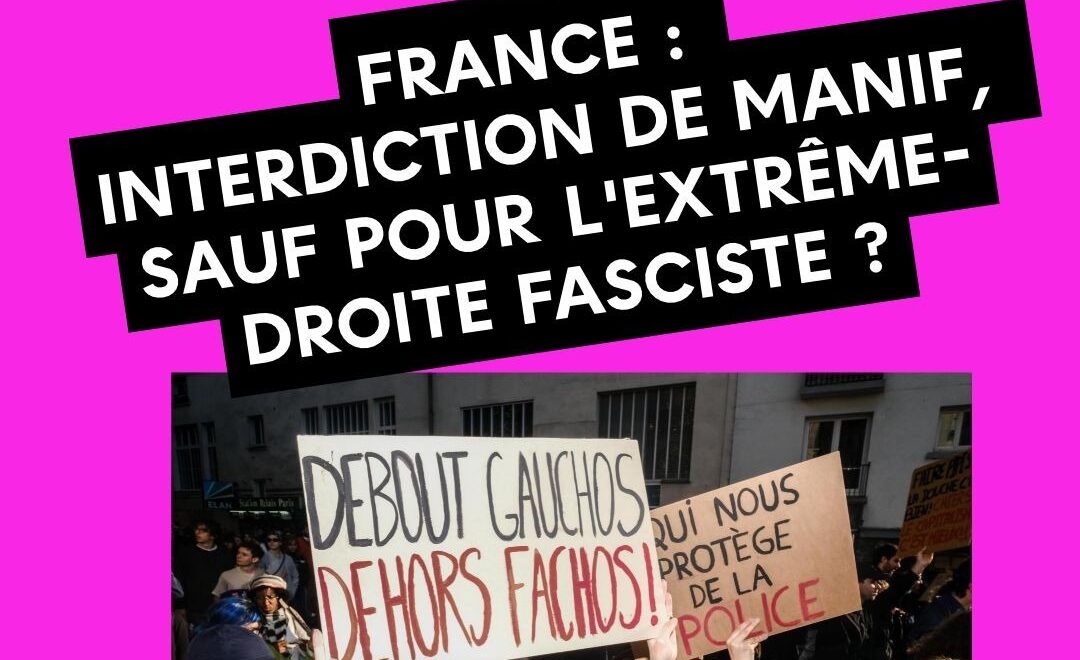
France: Disallowing demonstrations, except for the fascist far-right?
On October 17th in France, the social movement launched by high school students—particularly those from the suburbs—reached its peak, as they protested the deplorable state of school infrastructure, the lack of staff, and, in short, the government’s disinvestment in public services. The youth were joined by a resurgence of the “Yellow Vests”, a movement that had itself shaken France in 2018.
Last Saturday was, therefore, a historic day when nearly a million people took to the streets in dozens and dozens of cities to protest and speak out. The images went viral around the world. The French media (and media outlets everywhere else, notably Radio-Canada) mostly competed to scream the loudest about the unfortunate storefronts, while remaining silent on the actual demands of the movement. There was almost no mention of the brutal police violence against the protesters.
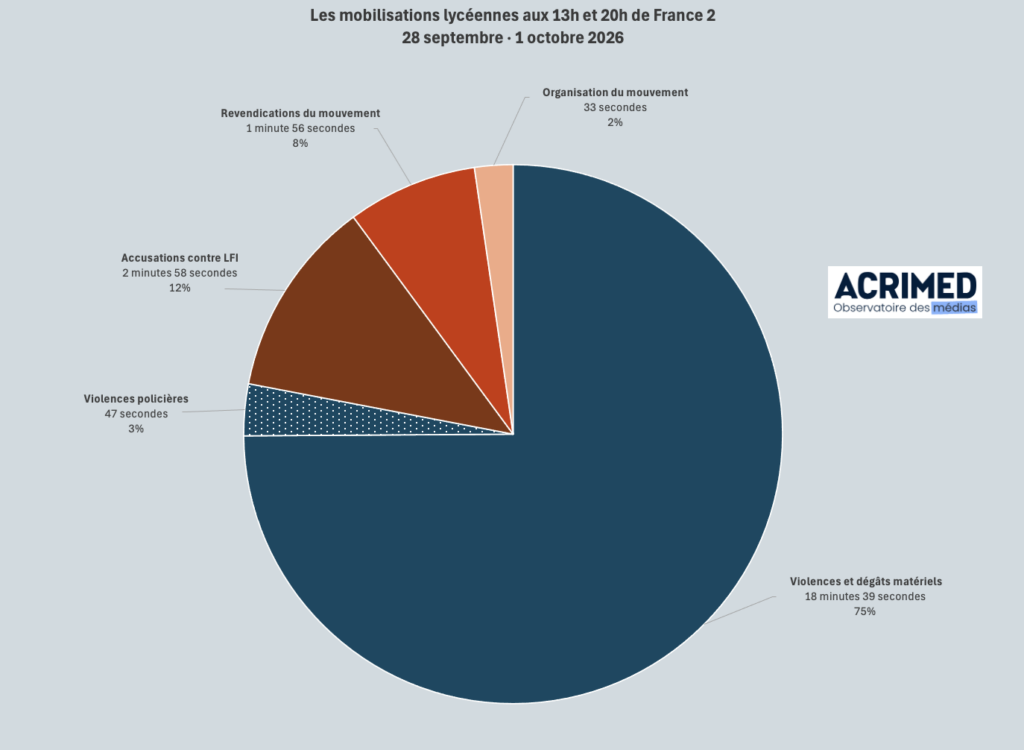
In fact, on October 2nd, the media watchdog ACRIMED had already condemned the sensationalist coverage by public broadcasters—particularly France 2—in their reporting on the high school student movement.
As the movement shows no signs of losing momentum—with a call already issued to continue the protests next Saturday—the French government has decided to step up its repressive measures even further. Indeed, on Monday, October 19th, curfews and bans on demonstrations were imposed in several cities and neighborhoods. Omnipresent police, intimidation of young people, racial profiling, helicopters flying at low altitude over Paris, and patrols using sound cannons: the French authoritarian regime in all its glory! And this Tuesday, the Minister of the Interior even spoke of deploying military counterterrorism units. No wonder people are increasingly afraid to protest in the self-proclaimed “country of human rights”…
But does this crackdown apply to everyone? It certainly doesn’t seem so. In Lyon, on that same Monday, October 19th, despite the curfew, neo-Nazi groups were able to take to the streets without being challenged. There were no police officers in sight, even as the fascists chanted racist slogans such as “France for the French” and “the streets belong to us”—slogans that directly echo the rhetoric of the Front National, which calls for a tougher stance against the left.
There have been countless instances in which fascist-leaning authorities have shown leniency toward the more explicitly violent factions of the far-right movement. Failing to intervene against fascists is not the same as doing nothing—it is giving them their approval.
As people fighting against fascist rhetoric and authoritarian tendencies—that is, as anti-fascists—it is our duty to denounce the presence of the far right, wherever it may be, and, in the spirit of international solidarity, to encourage our comrades who are fighting for a more just society!
The fascistization of minds and institutions is not a distant phenomenon. The ideologues and demagogues at Quebecor and other media outlets of the same ilk are already busy importing every one of its achievements here.